
Natural Prostate Support: What Every Man Should Know (But Most Are Never Told)
By a men’s health enthusiast who’s seen too many good men suffer in silence
Let’s talk about something most men would rather avoid entirely — the prostate.
If you’re looking for natural prostate support that actually works, you’ve come to the right place. Natural prostate support isn’t a trend — it’s a proven, science-backed approach that more and more men across the USA are turning to as they seek alternatives to prescription medications. Whether you’re already noticing the midnight bathroom trips, the weak urine stream, or that frustrating feeling of never quite finishing — or you simply want to stay ahead of the problem — natural prostate support strategies can make a real and lasting difference.
The truth is, prostate health for men is one of the most overlooked aspects of men’s wellness — until it becomes impossible to ignore. The good news? Nature has provided some remarkably effective tools that, when used correctly, deliver genuine, measurable results over time.
This guide walks you through the complete picture of natural prostate support — what the science says, what lifestyle changes matter most, and how to put it all together sustainably.
What Is Natural Prostate Support and Why Does It Matter?
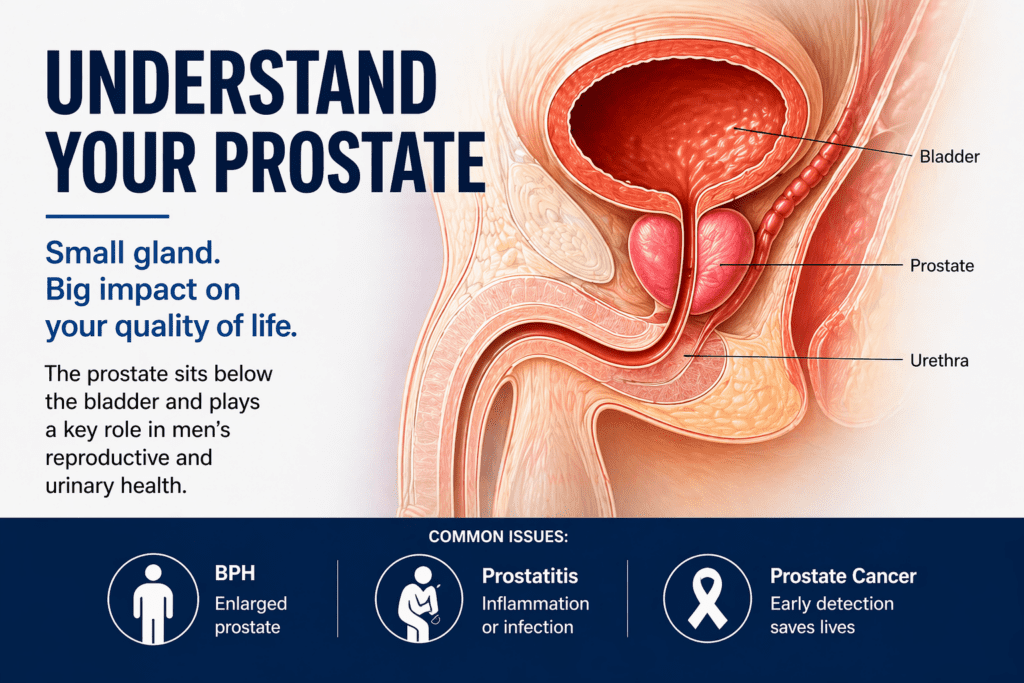
The prostate is a small, walnut-sized gland that sits just below the bladder and surrounds the urethra — the tube that carries urine out of your body. Its primary job is to produce fluid that protects and nourishes sperm.
The problem is that the prostate tends to grow as men age. This is called benign prostatic hyperplasia (BPH) — a non-cancerous enlargement that affects roughly 50% of men by their 50s. As it grows, it can squeeze the urethra and cause urinary symptoms — frequent urination at night, a weak urine stream, and difficulty emptying the bladder completely — that silently erode quality of life.
Here’s what most men don’t realize: the choices you make in your 30s and 40s deeply influence what your prostate looks like in your 60s and 70s. Because this is largely within your control, and natural prostate support is one of the most powerful levers available to men in the USA today.
How Hormones Affect Natural Prostate Support
One of the biggest drivers of prostate enlargement is dihydrotestosterone (DHT) — a potent derivative of testosterone. As men age, an enzyme called 5-alpha reductase converts more testosterone into DHT, which then binds to prostate cells and signals them to grow.
This hormonal shift isn’t inevitable. Diet, lifestyle, and certain plant compounds can influence this process significantly — which is exactly why natural prostate support is not wishful thinking. It is science-backed, clinically studied, and genuinely effective when applied consistently.
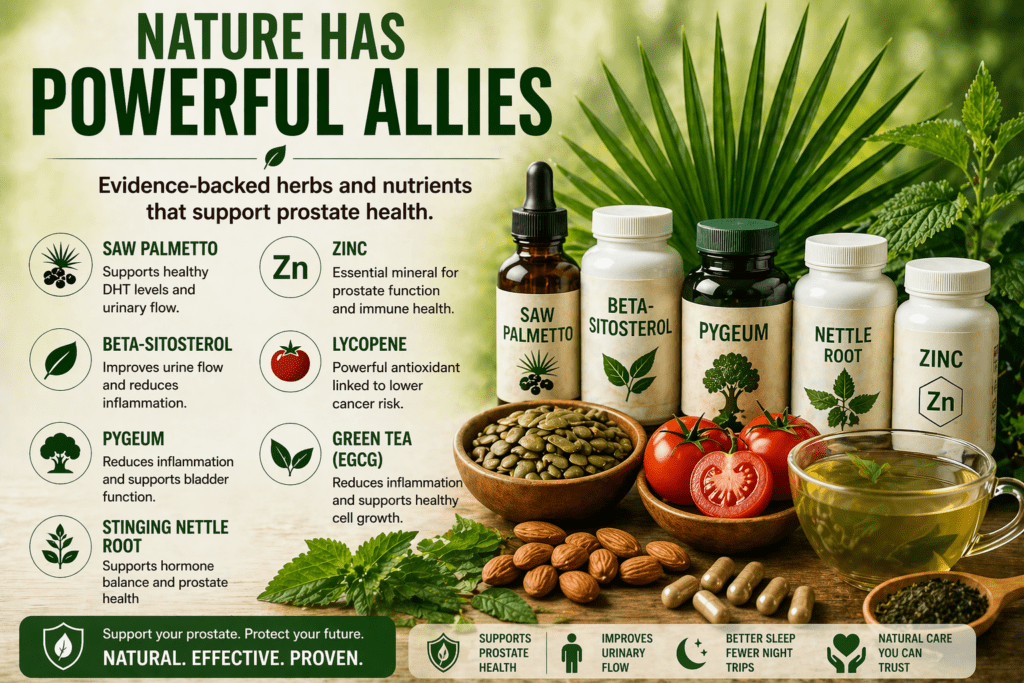
Let’s cut through the noise and focus on what actually has clinical evidence behind it when it comes to natural prostate support in the USA.
1. Saw Palmetto — A Cornerstone of Natural Prostate Support
Saw palmetto is the most studied herb for natural prostate support in the USA. Native to the southeastern United States, it has been used for centuries to support urinary and reproductive health. It appears to inhibit 5-alpha reductase — blocking the conversion of testosterone to DHT — and reduces inflammation within prostate tissue. Multiple clinical trials show it helps reduce urinary frequency, improve urine flow, and ease nocturia (nighttime urination).
The primary mechanism? Saw palmetto appears to inhibit 5-alpha reductase — the same enzyme that converts testosterone to DHT — and may also reduce inflammation within prostate tissue.
Multiple clinical trials have shown it can help reduce urinary frequency, improve urine flow, and ease the nighttime bathroom trips that disrupt sleep. While some studies have shown mixed results (largely due to differences in extract quality and dosage), high-quality, fat-soluble extracts standardized to 85–95% fatty acids tend to show the most consistent benefit.
Dosage typically studied: 160 mg twice daily or 320 mg once daily of a lipophilic extract.
Important note: Saw palmetto is not a treatment for prostate cancer and should not be used as one. Always work with your doctor.
2. Beta-Sitosterol for Natural Prostate Support
Beta-sitosterol is a plant sterol found in pumpkin seeds, avocado, and almonds, and it’s one of the most clinically impressive compounds for BPH natural relief. A landmark meta-analysis in The Lancet found it significantly improved urinary flow rates and reduced post-void residual volume. It works via prostaglandin metabolism — a different pathway than saw palmetto, making these two complementary, not redundant.
A landmark meta-analysis published in The Lancet reviewed four randomized controlled trials and found that beta-sitosterol significantly improved urinary flow rates and reduced the amount of urine left in the bladder after urinating (called post-void residual volume).
What’s particularly interesting is that beta-sitosterol works through a different mechanism than saw palmetto — it appears to influence prostaglandin metabolism and reduce inflammation rather than primarily blocking DHT. This makes it potentially complementary to saw palmetto rather than redundant.
Good food sources include: pumpkin seeds, avocado, almonds, and Brussels sprouts. Supplements typically range from 60–130 mg per day.
3. Pygeum Africanum — Clinically Studied Prostate Supplement
Pygeum, derived from African cherry bark, has been used in European medicine for natural prostate support since the 1960s. A Cochrane review of 18 randomized trials found men taking pygeum were more than twice as likely to report symptom improvement versus placebo. It reduces bladder discomfort and the sensation of incomplete emptying — two of the most frustrating BPH symptoms.
Research suggests it works through several pathways simultaneously — reducing inflammation, inhibiting the growth factors that stimulate prostate cell proliferation, and improving bladder function. A Cochrane review of 18 randomized trials found that men taking pygeum were more than twice as likely to report improvement in symptoms compared to placebo.
It’s particularly useful for men experiencing reduced bladder capacity and the sensation of incomplete emptying — two symptoms that are common but often under-discussed.
4. Stinging Nettle Root (Urtica dioica)
Nettle root supports men’s hormonal health naturally by reducing SHBG binding to testosterone, helping maintain better hormone balance with age. When combined with saw palmetto, clinical trials showed improvements in urinary flow comparable to pharmaceutical options — with far fewer side effects. This makes it a smart stacking choice for any natural prostate support plan.
It also has anti-inflammatory properties and has been shown in some studies to inhibit prostate cell growth. When combined with saw palmetto, the research is particularly encouraging — a combination trial showed improvements in urinary flow and symptom scores comparable to pharmaceutical options, with far fewer side effects.
5. Zinc — An Essential Mineral for Natural Prostate Support
The prostate contains the highest zinc concentration of any organ in the body. Men with BPH and prostate cancer consistently show lower zinc levels in prostate tissue. Zinc regulates 5-alpha reductase, supports immune function, and is essential for testosterone metabolism. Best food sources: oysters, pumpkin seeds, red meat, legumes.
Zinc is involved in testosterone metabolism, immune function, and regulating the enzyme 5-alpha reductase. Studies have shown that men with BPH and prostate cancer tend to have significantly lower zinc levels in prostate tissue compared to men with healthy prostates.
While supplementation studies have produced mixed findings when it comes to cancer prevention, maintaining adequate zinc levels is almost certainly important for overall prostate function. Food sources include oysters (the richest source by far), red meat, pumpkin seeds, and legumes.
Supplemental zinc should be used cautiously — excess zinc over long periods can impair copper absorption. Stick to 15–30 mg per day from a combined diet and supplementation, and choose chelated forms like zinc glycinate for better absorption.
6. Lycopene — Prostate Cancer Prevention Research
Lycopene — the pigment in tomatoes and watermelon — is one of the most promising nutrients in prostate cancer prevention research. Multiple epidemiological studies link higher lycopene intake with reduced prostate cancer risk. Lycopene from cooked tomatoes (paste, sauce) is far more bioavailable than raw. It reduces oxidative stress and inflammation in prostate tissue.
Multiple epidemiological studies have linked higher lycopene intake with reduced prostate cancer risk. Interestingly, lycopene from cooked tomatoes (like tomato paste or sauce) is significantly more bioavailable than from raw tomatoes, because heat breaks down the cell walls that otherwise limit absorption.
Lycopene appears to work by reducing oxidative stress and inflammation in prostate tissue, and may influence the signaling pathways that control how quickly cells grow and divide.
If you’re not already eating cooked tomatoes regularly, this is an easy and delicious change to make.
7. Green Tea (EGCG) for Natural Prostate Support
Green tea’s active compound — EGCG — has shown anti-cancer properties in human studies. An Italian clinical trial found men taking green tea catechins had a dramatically lower rate of progression to prostate cancer over one year. Green tea also reduces DHT and inhibits 5-alpha reductase — a dual-action natural prostate support mechanism.
A notable Italian clinical trial found that men with high-grade prostatic intraepithelial neoplasia (a precancerous condition) who took green tea catechin supplements had a dramatically lower rate of progression to prostate cancer compared to the placebo group over one year.
Green tea also appears to reduce DHT levels and inhibit 5-alpha reductase, adding another mechanism of support.
Drinking 2–3 cups of high-quality green tea daily is a simple habit with potentially profound long-term effects.
Natural Prostate Support Through Diet: Food as Medicine
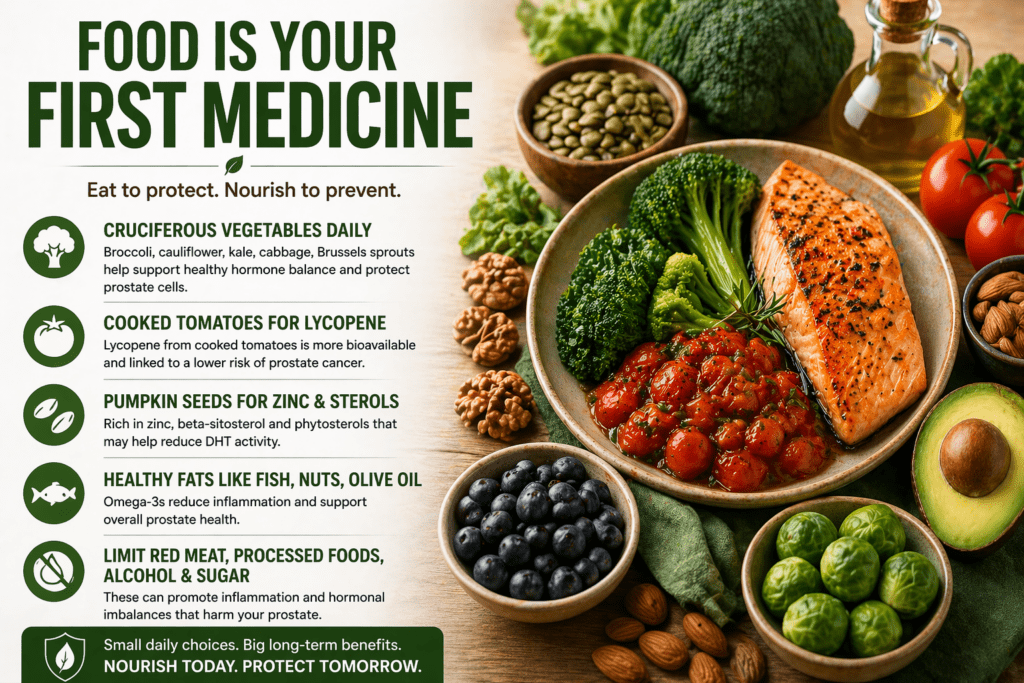
Supplements are one piece of the puzzle. But food is where the foundation of natural prostate support gets built. Here are the most evidence-backed dietary changes for prostate health for men in the USA:
Load Up on Cruciferous Vegetables
Broccoli, cauliflower, kale, cabbage, Brussels sprouts — these vegetables contain compounds called indole-3-carbinol and sulforaphane that have been shown to support healthy estrogen metabolism and inhibit prostate cancer cell growth in lab studies. Aim for at least one serving per day.
Embrace Healthy Fats
Omega-3 fatty acids, found in fatty fish (salmon, sardines, mackerel), walnuts, and flaxseed, have anti-inflammatory properties that benefit the prostate. On the flip side, a diet high in omega-6 fatty acids (from processed seed oils) can promote inflammation, which is one reason why the modern Western diet may contribute to prostate problems.
Eat More Pumpkin Seeds
Pumpkin seeds are almost a superfood specifically for the prostate — they’re rich in zinc, beta-sitosterol, and certain phytosterols that may help reduce DHT activity. A handful a day is one of the most effortless prostate-friendly habits you can build.
Reduce Red Meat and Processed Foods
Heavy consumption of red meat and processed foods has been associated with higher rates of prostate cancer in several large studies. This doesn’t mean you need to become vegetarian — but reducing portion sizes and frequency, and choosing grass-fed, leaner cuts when you do eat meat, makes a measurable difference.
Cut Back on Alcohol and Sugar
Both alcohol and excess sugar promote inflammation and can disrupt hormonal balance. Even modest reductions in alcohol intake have been associated with improvements in urinary symptoms.

Lifestyle Habits That Strengthen Natural Prostate Support
Exercise — Especially Aerobic Activity
Men who exercise regularly have significantly lower rates of BPH symptoms and prostate cancer compared to sedentary men. Even brisk walking for 30 minutes a day has shown measurable benefits in research. Exercise reduces inflammation, improves insulin sensitivity, helps maintain a healthy weight, and supports hormone balance — all of which directly benefit the prostate.
Maintain a Healthy Weight
Obesity — particularly abdominal fat — is strongly associated with worse prostate outcomes. Fat tissue converts androgens to estrogens via an enzyme called aromatase, which can accelerate prostate tissue growth. Losing even 5–10% of body weight if you’re overweight can produce noticeable improvements.
Manage Stress
Chronic stress elevates cortisol, which can disrupt testosterone and DHT metabolism over time. It also promotes systemic inflammation, which is a major contributor to both BPH and prostate cancer risk. Practices like meditation, deep breathing, adequate sleep, and time in nature aren’t soft recommendations — they’re clinically relevant.
Stay Well Hydrated (But Time It Smartly)
Good hydration keeps urine dilute, reduces irritation of the bladder and urethra, and supports the prostate’s secretory functions. However, if you’re dealing with nocturia (waking at night to urinate), try reducing fluids 2–3 hours before bed and see if that helps.
Ejaculation Frequency
This might surprise you: research has suggested that regular ejaculation — around 21 times per month or more — is associated with lower prostate cancer risk. The leading theory is that frequent ejaculation clears the prostate ducts of potentially carcinogenic secretions. Whether you achieve this through sexual intercourse or masturbation doesn’t appear to matter clinically.
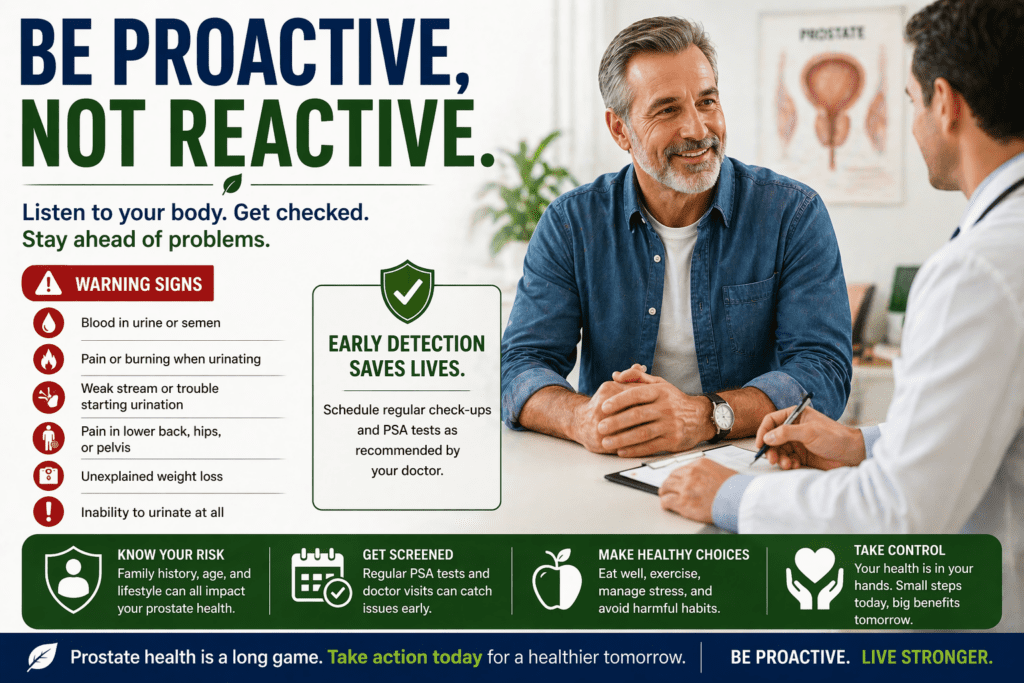
⚠ Warning Signs That Natural Prostate Support Alone Can't Fix
Natural prostate support is powerful, but it’s not a substitute for medical evaluation. See a USA-licensed urologist promptly if you notice:
- Blood in your urine or semen
- Pain or burning during urination
- Persistent pain in your lower back, hips, or pelvis
- Difficulty starting urination or a very weak stream
- Inability to urinate at all
- Unexplained weight loss
Your Daily Natural Prostate Support Routine
Here’s what a full day of evidence-based natural prostate support looks like in practice:
- 2 cups of green tea (EGCG)
- Pumpkin seeds over oatmeal or yogurt
- Zinc-rich foods: eggs, nuts, seeds
- Saw palmetto supplement (320 mg)
- 1–2 servings cruciferous vegetables
- Cooked tomatoes in at least one meal
- Almonds or walnuts as snack
- Beta-sitosterol supplement (60–130 mg)
- 30 min aerobic exercise (walk, cycle, swim)
- Fatty fish (salmon) 2–3× weekly for dinner
- Lycopene supplement if tomato intake is low
- Reduce fluids 2 hours before bed
- Meditation or light stretching
- 7–8 hours quality sleep
- No alcohol or sugary drinks at night
Frequently Asked Questions
What is the Best Natural Supplement for Prostate health in the USA?
Saw palmetto (320 mg lipophilic extract) is the most studied and widely used natural prostate supplement in the USA. For best results, combine it with beta-sitosterol (60–130 mg) and pygeum africanum for a multi-pathway approach. Look for GMP-certified, FDA-registered facilities when choosing a supplement brand.
How can I shrink my Prostate Naturally
While no supplement "shrinks" the prostate overnight, reducing DHT through 5-alpha reductase inhibiting herbs (saw palmetto, nettle root), maintaining a healthy weight, regular exercise, and eating foods rich in lycopene and beta-sitosterol can help slow enlargement and significantly improve symptoms over 3–6 months of consistent effort.
What are the earliest signs of Prostate problems in men?
The earliest signs include: increased urgency to urinate, waking more than once at night to urinate (nocturia), a weaker or interrupted urine stream, and a sensation of incomplete bladder emptying. These early signs of BPH are common in men over 50 across the USA and respond well to natural prostate support strategies.
Does Saw Palmetto really work for the Prostate?
Research is mixed but encouraging. Two large NIH-funded trials found limited benefit; however, many smaller and European studies show meaningful improvements in urinary symptoms — particularly when using high-quality, standardized, fat-soluble extracts (85–95% fatty acids). Quality of the extract matters enormously. Cheap products often underdeliver.
Is Lycopene good for prostate health?
Yes — lycopene is one of the most promising nutrients for prostate cancer prevention research. Multiple population studies link higher lycopene intake to reduced prostate cancer risk. Cooked tomato products (paste, sauce) deliver far more bioavailable lycopene than raw tomatoes. Include them in your natural prostate support diet daily.
Can exercise reduce enlarged prostate symptoms?
Yes. Regular aerobic exercise is consistently associated with lower BPH symptom severity and reduced prostate cancer risk in large population studies. Exercise reduces systemic inflammation, improves insulin sensitivity, and helps maintain hormonal balance — all of which directly support prostate health. Even 30 minutes of brisk walking daily makes a measurable difference.
The Bottom Line on Natural Prostate Support
Natural prostate support isn’t a quick fix — it’s a long game, and a deeply worthwhile one. Men who commit to a consistent natural prostate support plan — combining the right clinically studied herbs, prostate-protective foods, and smart lifestyle habits — do see real, meaningful improvements.
Better sleep because they’re not up four times a night. More confidence because they’re not mapping every bathroom in every building. More energy because they’re eating well and moving their bodies. The prostate doesn’t have to be a source of dread. With a smart, science-backed natural prostate support approach, it can be just another part of your health that you’re quietly, confidently taking care of — long before it becomes a problem.
That’s the goal. And for men across the USA who commit to it, it’s absolutely achievable.